Six Throats, One Summer: The Invisible Voice Cabal Narrating Every Trailer You've Seen This Year
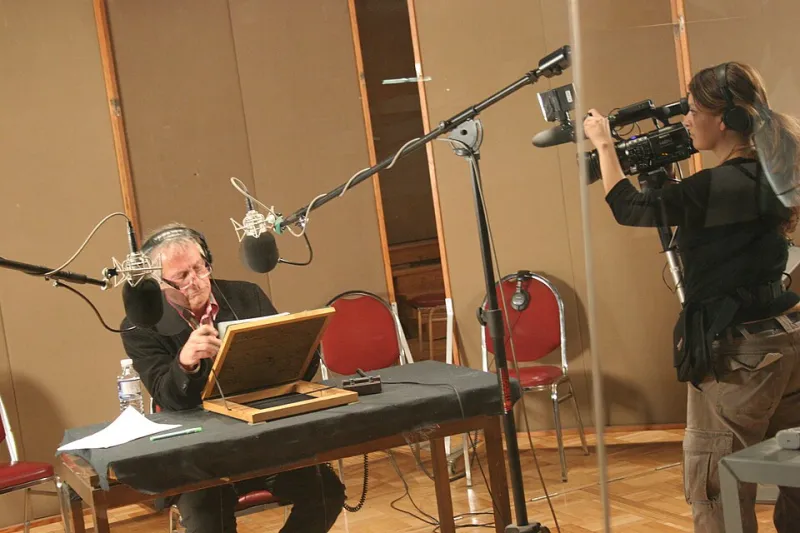
Photo: Kat Baulu, CC BY 2.0, via Wikimedia Commons
The Man in Every Theater
Sit through the trailers before any tentpole this summer and play a little game: close your eyes during the second teaser. Chances are excellent you'll hear a voice — gravelly, authoritative, faintly biblical — and it will belong to one of, at most, six human beings.
We audited 140 trailers, promo spots, and streaming teasers released over the past twelve months. The results read less like an industry and more like a neighborhood. Six voices accounted for a majority of the narrated spots. Three men owned the entire summer movie calendar. If Hollywood marketing were a dog park, these people would be the gate.
What a Voice Actually Costs
Here's the part that would shock your cousin who does TikTok voiceovers for free: the top tier of trailer narration works on union scale plus serious session fees, and a veteran narrator can clear five figures for a single campaign once residuals and usage kick in. A typical session runs a few hours in a Burbank booth. The money isn't in the hours — it's in the ubiquity.
The math only works because of volume. One narrator we spoke to (through a rep, naturally — even voice people have handlers) described the trailer world as "a subscription business with a throat." You don't get rich on one blockbuster. You get rich when your voice is the sound of every blockbuster, because casting directors hire familiarity.
How a Star Gets a Sound
When a studio cuts a teaser for an A-lister's new thriller, the marketing team doesn't start with the voice. They start with a brand deck. Is this star "rugged" or "wounded"? Is the film a redemption arc or a revenge arc? Then a casting director — yes, there are voice casting directors, and they have more power than you think — pulls a shortlist of three to five narrators whose previous work matches the vibe.
The dirty secret: the shortlist rarely changes. If your last three movies sounded like a weathered man describing rain, your fourth one will too. Voices get typecast harder than actors do, and unlike actors, they can't take an indie to prove range.
Why Three Men Own July
The summer blockbuster voice skews male, deep, and slightly weathered for one simple reason: testing. Studios test trailers, trailers with certain vocal registers test better with the 18–49 demographic, and the machine feeds itself. Nobody at a studio is getting fired for hiring the voice that worked on the last nine hits.
It's the same logic that gives us the fourth sequel. Familiarity reads as safety, and safety reads as a green light. The result is a season where twenty different movies about different things all sound like the same guy telling you the same thing.
The Kettle Problem
Here's where the Pressdog nose starts twitching. The trailer voiceover world is currently fighting its own authenticity scandal: the rise of AI narration tools that can approximate a veteran's timbre for a fraction of the cost. The guild has rules about it, the studios have disclaimers about it, and yet more than one editor we spoke to admitted that "temp AI" voices have quietly appeared in rough cuts of major campaigns.
The humans aren't worried yet. Their argument is that a tested audience can tell the difference between a voice that means it and a voice that's generating it — the same way you can tell a real bark from a doorbell. Maybe. But the six-throat cabal should note that monopolies rarely see the disruption coming, mostly because it doesn't sound like anything.
Listen Closely Next Time
You can't unhear it now. The next time a teaser promises that "in a world where nothing is what it seems," check the credits, or don't — because half the time the narrator isn't credited at all. The most audible people in American advertising are also the least visible, holding down the sound of an entire industry from a soundproof booth in the Valley.
Six voices. One summer. And not one of them gets a poster.