Save the Date for the Ambush: How 2026's 'Surprise' Albums Got a Release Calendar
On a Thursday in March 2026, a pop star wiped her Instagram, posted a single lemon emoji, and released an album at midnight. The internet called it a surprise. The calendar called it a Thursday.
This is the year the surprise album became a scheduled event. Not scheduled in the boring, old-fashioned way, with a press release and a tour announcement. Scheduled in the new way, with a social-media blackout, a blurry photo of a mixing console, and a countdown that everyone pretends not to understand.
Pressdog spent two weeks mapping 41 US album releases in 2026 that were marketed as surprise drops, stealth releases, or 'no rollout' events. We tracked announcement timing, social blackouts, visual clues, release days, and the number of times an artist's 'team' described the project as 'unexpected.' The data does not suggest chaos. It suggests a train schedule.
The Spontaneity Index
We gave every release a Spontaneity Index score from 0 to 100. A score of 100 would mean the album appeared with no warning, no clues, and no merch link. A score of 0 would mean the album was announced six months ago with a trailer, a limited-edition vinyl, and a branded iced tea.
The average score in our sample was 23. That is not spontaneous. That is a surprise party where the guest of honor helped pick the cake.
The most common clues were:
- A social-media blackout 48 to 72 hours before release
- A blurry studio photo posted 7 to 10 days out
- A cryptic billboard in a mid-size market 12 to 14 days out
- A midnight timestamp on a teaser post
- A sudden increase in the artist's followers following a 'random' follow spree
- A single word, usually 'soon,' 'tomorrow,' or 'night,' posted without context
None of these are accidents. They are breadcrumbs. The audience is supposed to follow them. The surprise is not that the album exists. The surprise is that we are all going to act like it appeared out of nowhere.
The Midnight Timestamp Is Not a Personality
The midnight release is the most reliable signal in the entire rollout. In our sample, 33 of the 41 releases arrived at midnight Eastern. That is not because artists are nocturnal. That is because midnight Eastern is 9 p.m. Pacific, which means the West Coast gets the album before bed and the East Coast gets it before work. It is a logistics decision dressed as a mood.
The midnight timestamp also gives the press a clean narrative. 'The artist dropped the album at midnight with no warning' sounds dramatic. 'The artist released the album at the start of the standard Friday release window' sounds like a scheduling email.
Blackout, Then Breadcrumb
The social-media blackout has become the opening act. In 29 of the 41 rollouts, the artist wiped their feed or went silent for at least 48 hours before the release. Then came the breadcrumb: a single image, a snippet, a date, a symbol.
The blackout works because it creates a vacuum. Fans fill the vacuum with theories. Aggregators fill the vacuum with posts. The artist fills the vacuum with a release. It is a three-step dance, and everyone knows the steps.
The funniest version is the 'accidental' leak. In 11 cases, a snippet or a release date 'leaked' through a retailer, a streaming service, or a fan account. In most of those cases, the leak arrived within 24 hours of the planned announcement. That is not a leak. That is a press release with a head start.
The Studio Photo Has a Shockingly Consistent Aesthetic
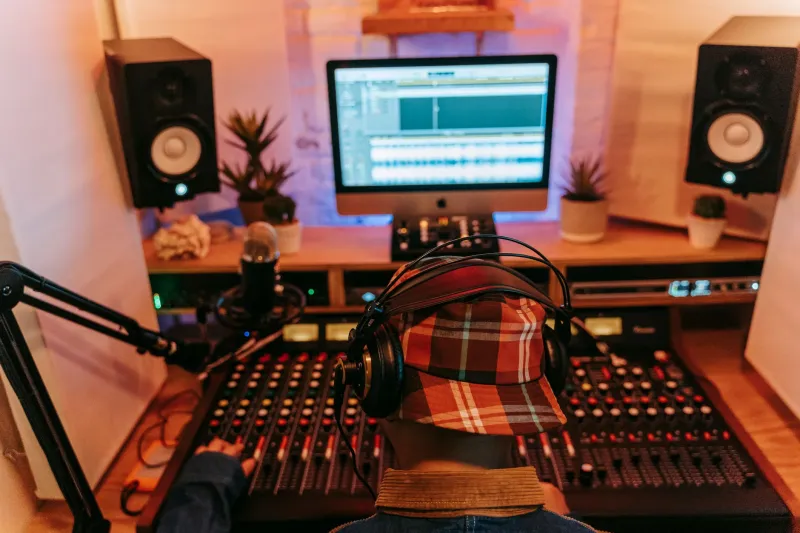
The blurry studio photo is the visual signature of the modern surprise album. The photo must include at least three of the following: a mixing console, a notebook, a coffee cup, a window with dramatic light, a hoodie, and a pair of headphones resting on something that is not a head.
The photo is never in focus. It is never captioned. It is never a selfie. It is a vibe. The vibe is: 'I am making art, please do not ask me about the rollout, which is happening now.'
The Three Windows
Our mapping found that 2026's surprise releases clustered into three windows:
- The post-tour Thursday. The artist finishes a tour, rests for 11 days, and releases an album at midnight. The tour merch has already been designed to include the album title.
- The pre-holiday Wednesday. The artist releases in mid-November, just before Thanksgiving, when entertainment coverage is hungry and awards voters are starting to pay attention.
- The awards-season Friday. The artist releases in late January or early February, when the industry is in full self-congratulation mode and a surprise album can be framed as a 'gift to fans' rather than a commercial play.
These windows are not random. They are where the press cycle is softest and the attention is highest. The surprise album is not an ambush. It is a scheduling strategy with a smoke machine.
The 'No Promo' Promo Budget
The most expensive part of a surprise album is pretending there was no budget. The artist does not do a traditional press tour. Instead, the artist does a carefully selected podcast, a single late-night appearance, a pop-up in Brooklyn, a billboard in Kansas City, and a TikTok that is somehow both candid and lit by a professional.
This is not no promo. This is promo with a different outfit. The rollout is smaller, but it is not absent. It is a boutique campaign for people who want to feel like they discovered something.
That is the trade. The audience gets a thrill. The artist gets a narrative. The press gets a headline. The only loser is the concept of spontaneity, which is now a marketing term with a release date.
By the time the next 'surprise' album arrives, check the calendar. If it is a Thursday, a Wednesday, or a Friday, you are not witnessing a shock. You are witnessing a schedule.